
Selce
Location
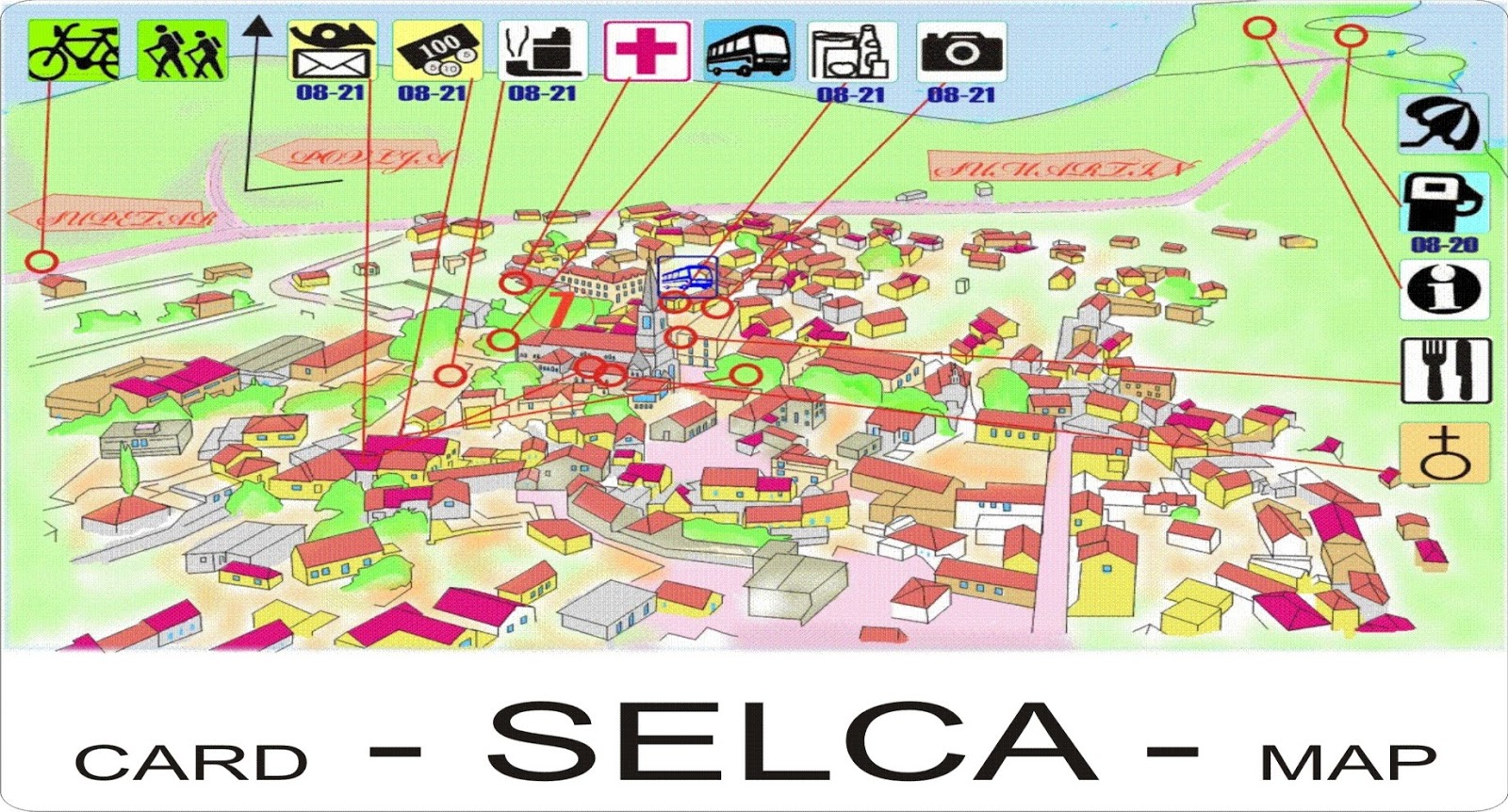
Selce is located in a picturesque bay on the northeastern edge of the Kvarner Bay, 40 km south of Rijeka, on one of the most natural and most beautiful parts of the Adriatic coast and the whole Mediterranean. This coastal town with a centuries-old tourist tradition was once a fishing village and a mason, and today it is an interesting tourist destination, enchanting with its natural beauties, clean air and sea.Selce can host several thousand tourists in private and hotel accommodation, resorts and two campsites.
A mild climate with over 2500 sunny hours per year, an average summer temperature of 25 ° C, and an annual average of 14 ° C provide a pleasant stay in all seasons.
The clean air and the clear sea with an average summer temperature of 23 ° C, the bathing season from May to October and the modernly designed beaches that have been wearing the Blue Flag for several years will allow you a pleasant and fun vacation.
from www.selce.org
CLIMATE
The Croatian coast has its jewelis. One of the lovelist is Selce – a coastal town with a 110 year tourism tradition.
Once a town of fisherman and stonemansons, over the past century. Selce has developed into an attractive tourism destination. Selce is situated on a picturesque coastline, near Crikvenica and only 35 kilometres south of Rijeka one of the most diverse and beautiful parts of the Adriatic coast.
The mild climate, with over 2500 hours of sunshine per year, an average summer temperature of 25 C and a mean annual temperature of 14 C allows for a pleasant vacation all year round. The clean air and crystal clear sea, with a mean summer water temperature of 23C and a bathing season from May to October, modernly equipped which have been flying the European blue flag for several years, the dive centre with its diving school, and the many possibilities for water sports are sure to make your summer a lot of fun.
The waterfront, diverse cultural, entertainment and sports events (folklore, concerts, art exhibitions, show programs, fishermans night, sport fishing and more) will make your stay in Selce unforgettable.
HISTORY
These regions were inhabited in the prehistoric period. The oldest remains of human habitats are found on the hill of St George.
A stone dyke, created after a prehistoric wall crumbled into ruins, frames the flat plateau of the hill. Within this stone wall, which was once three metres high, there was an early settlement of which little remains. This hill-fort is believed to have been built during the Middle Bronze Age, between the 15th and 14th centuries B.C. Its builders were the Liburni, an Illyrian people who ruled North Adriatic and the islands.
The nautical values of natural ports, and also the beauty of this region, were also estimated by the Romans. The finds discovered in the area of Selce witness to a late ancient settlement from the 2nd century A.D.. Here were farm buildings, villa rustica, and pier facilities for the embarkation and debarkation of goods.
An important Roman route passed through this region connecting the north of Italy (the town of Aquileia) via Tergeste (Trieste), Tarsatica (the old town of Rijeka), and Dalmatia. The Roman geographical map Tabula Peutingeriana and some early guide-books noted an important station under the name of Ad Tures, which had a garrison and served to protect the region.
At the end of the 6th century, Croatian tribes eventually penetrated via the Roman roads from the northwest. They assimilated the existing Roman population, and learnt some their skills, such as the cultivation of the vine. During the Middle Ages, Selce was known for its good vineyards. Together with agriculture and cattle breeding, fishing and maritime trade gradually developed.
In 1224, the princes of Krk possessed Vinodol. Selce, as the part of the old Croatian community of Bribir, came into their possession, and from the middle of the 15th century they were named the Frankopans. Selce used its natural facilities for sea trade.
In 1572, Selce and almost all the possessions of Vinodol were taken over by the Zrinski princes. The Zrinski family supported trade by land and sea, so that the port of Selce developed ever more intensively. The people of Selce had engaged traditionally in vine and olive growing, the breeding of sheep and tuna fishing.
But olives were still processed in four mills. Besides fishing, the men of Vinodol engaged in maritime affairs and trade, so that by the end of the 19th century there were some twenty larger sailing ships for the transportation of wine, oil and other goods.
CULTURAL HERITAGE
The Parish Church of St Catherine
It was built in 1888 in the neo-Gothic style. The main altar for the new church was built of marble by the well-known Rijeka master Pietro Rizzi, while the painter Giovanni Fumi, originating from Venice, painted the image of St Catherine above the tabernacle. The ceiling of the sanctuary was painted in 1910 by Ferdinand Ludwig of Senj. The organ and the Baroque baptismal stone font, now under the choir, were transferred from the old church. A Baroque reliquary with the relics of St Catherine is also kept in the church. The Baroque reliquary with the relics of St. Catherine is kept in the parish church.
The Chapel of St Catherine
This little chapel lies buried among the vegetation of a small park. It has 60 cm thick walls, and is supposed to have been built in the pre-Romanesque period. In the 15th century it began to crumble and was repaired in 1498 and re-consecrated by the Modruš bisbop Kristofor.
The Chapel of St John
The original sanctuary of the old one-aisled Baroque church of St Catherine has been preserved, and is dedicated to St John. The church altar, previously the Baroque church’s main altar, was built by Jacopo Businello and Antonio Capovilla under the influence of Venetian masters who used to build “golden altars” in the Baroque style in these areas.
The Chapel of Sts Fabian and Sebastian
It is situated outside the town, not far from the crossroads of the Adriatic Highway and the road for Bribir. It was designed in the neo-Baroque style. The interior of the church is rather modest, and houses various votive gifts. This votive church was dedicated to its saintly protectors against plague and cholera in the middle of the 19lh century.
The Chapel of St George
It has been supposed that its oldest part was built in the pre-Romanesque period (9th to 10th centuries) on the site of a late Roman “specula”, or military guard house. It was devoted to the most popular saint of the Middle Ages, St George, who is often connected with the pre-Christian pagan tradition of “Green George” symbolizing the coming spring.
“Toc” – the Mill for Olives.
The last “toč” in Selce was built out of the stone taken from the near by Roman ruins, most probably in the 18th century. It contains a monolithic stone wheel, a press for crushing, and “kamenice”- stone vessels for keeping the oil, and also various wooden containers. Today, it is an interesting and valuable museum of olive processing in the old days. The building with its completely preserved works and equipment acted as an unique studio.
The common name for all water springs in Selce is “polača”. The last “polača I, at which “perilo” – the area for washing – was organized, is situated near the church of St Catherine and it is an interesting example of community organization.
On the wall near the source, there is a mosaic, the work of the painter Hajrudin Kujundžić, depicting a girl of Selce in folk costume coming to the water with a “brenta” (a wooden pot).
In order to temper the summer heat, the Hungarian Maritime Governorship had a large water-store built in 1796; and there is a memorial inscription on its outside wall. The water-store is fenced by a high wall, while the statue of St Anthony was set in a small niche at a corner. A similar water-store – “štirna” – was built in the area of Brdo, on the eastern side of the town.
Apartmani Augustinović
Contact us, we will gladly respond you as soon as we can
Selce, Rade Končara 93, Croatia
Contact us via the phone:
++385 (0) 98 902 73 52 (CRO)
++49 (0) 51 933 059 (Germany)